
English| EUR
Suggested for you
More currencies
Choose a language
Two valley glaciers sit twenty-three road kilometres apart on the West Coast, both fed by the Southern Alps, both reachable only by helicopter for on-ice walking. Travellers arriving in Westland Tai Poutini National Park usually have time for one. This page sets out what separates them and how to decide.
Quick answer
Entry to the national park itself costs 0 NZD at both glaciers; only the guided heli-hike is paid separately. Fox sits beside a quieter township with a longer, lower-gradient valley, while Franz Josef has a larger visitor base and a steeper, more broken icefall. Weather grounds flights at both. Arriving between 08:30 and 16:00 gives the best odds.
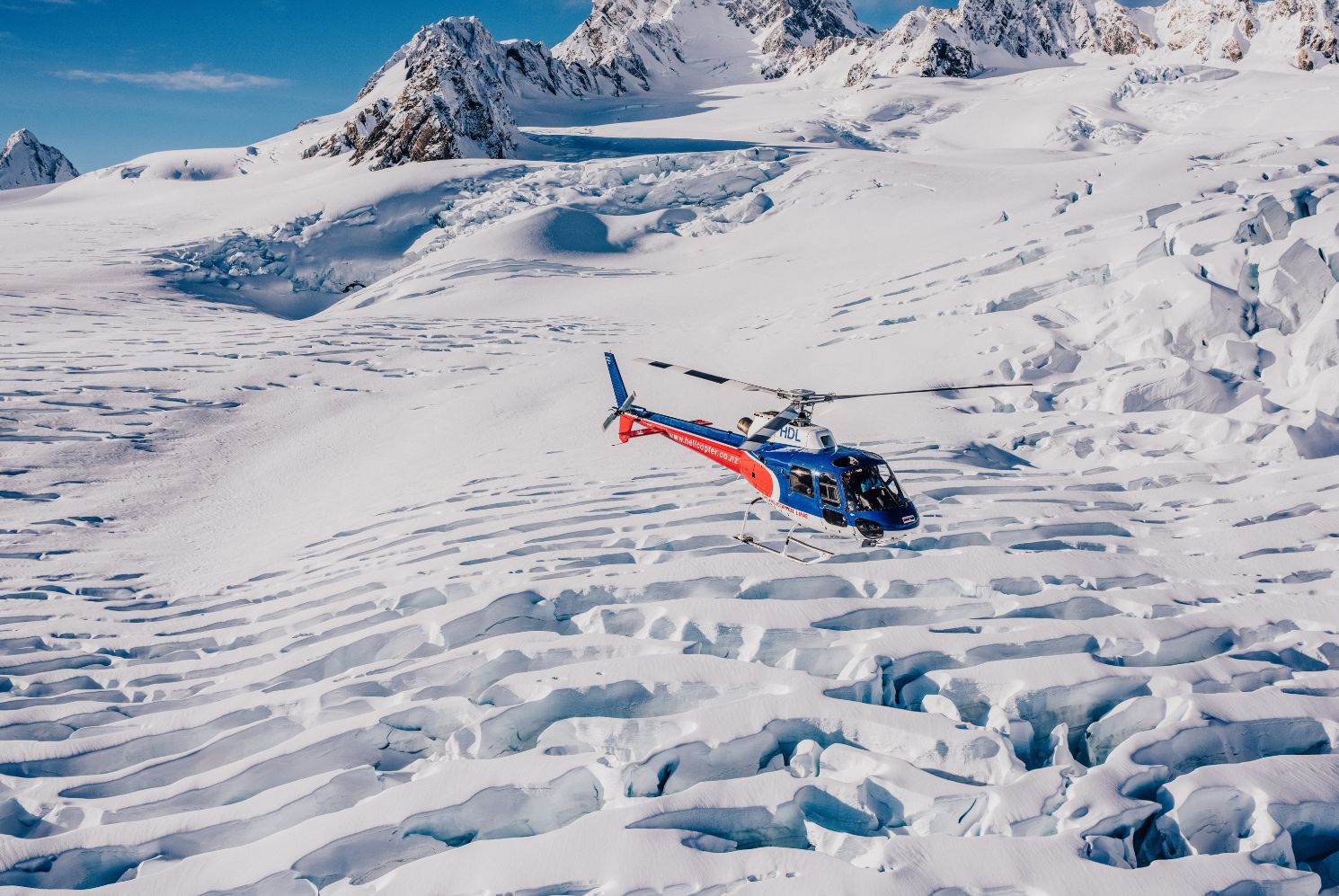
Fox Glacier descends from around 2,600 metres to roughly 300 metres above sea level — an unusually low terminus for a temperate latitude, ending amid rainforest rather than tundra. Its neighbour to the north does much the same. That shared geography is why the fox glacier heli hike vs franz josef question rarely resolves on scenery alone; both glaciers are fed by the same Southern Alps snowfields and both flow through the same beech and podocarp valleys of Westland Tai Poutini National Park. The practical differences sit elsewhere. Fox's valley is longer and its mid-section gradient gentler, which tends to produce broader ice terraces and more walkable pressure ridges once a helicopter has set down. Franz Josef's icefall is steeper and more actively broken, giving tighter séracs, deeper blue crevasse walls and a more vertical feel underfoot. Guides on both work the same way: crampons issued at base, boots fitted, a short flight up-valley, then one to two hours of guided walking on ice that has been route-marked that morning. Neither glacier is accessible on foot from the terminal face — retreat and rockfall closed the old valley-floor walk-up routes years ago, and the terminal viewpoints now stop well short of the ice. Township character often decides it. Fox Glacier village is small, strung along State Highway 6, and quieter in the evenings, with Lake Matheson and its reflection walk five minutes west. Franz Josef township is larger, busier and carries more accommodation, restaurants and backpacker traffic. Travellers wanting a base with options lean north; those wanting quiet lean south. Both townships operate their own helipads and their own guiding companies, so a booking at one does not transfer to the other. Weather is the variable that overrides every comparison. The West Coast receives several metres of rain annually, and low cloud in the valley grounds helicopters regardless of conditions on the ice above. Experienced visitors build a spare day into the itinerary and hold it loosely. Anyone weighing a glacier hiking trip on the West Coast should treat the fox glacier heli hike vs franz josef guide question as secondary to that buffer day — the glacier you actually fly onto is often the one whose valley clears first. Confirm current conditions on +64 3 751 0807 or with the Department of Conservation before committing to a date, and book the flight rather than the drive.
“The glacier you actually fly onto is often the one whose valley clears first.”
The best arrival window for glacier operations is 08:30–16:00, as morning and early afternoon provide the highest probability of stable weather and flight clearance. Scheduling your heli-hike early in the day is critical, as mountain weather patterns often shift and increase cloud cover as the afternoon progresses.
Warm, 18°C to 22°C. High activity.
Higher volume of visitors during these months makes early morning starts essential for securing preferred flight times.
Variable, 10°C to 18°C. Frequent changes.
The transition months offer more stable conditions and fewer crowds, increasing the likelihood of successful flight operations.
Cold, 2°C to 12°C. Clearer skies.
While days are shorter, the lower temperatures often bring clear air, providing better visibility for heli-hike departures.
—
Arriving at 08:30 reduces the risk of flight cancellations caused by afternoon weather instability.
Verdict: The optimal approach is to plan for a weekday morning arrival between 08:30 and 16:00 during the shoulder months of March, April, October, or November.
Operational hours for glacier activities at Fox Glacier remain consistent throughout the week to support flight and hiking schedules.
Access to the Westland Tai Poutini National Park, where both Fox Glacier and Franz Josef are located, is free of charge. Participation in heli-hike experiences requires booking through licensed commercial operators.
Verdict: There is no admission fee to enter the glacier areas, though you must pay for a guided heli-hike operator to access the ice.
Both Fox and Franz Josef heli hikes run on the same broad requirements, so prepare for gear, safety briefings and a moderate fitness load well before you arrive.
Everything you need to know about fox glacier heli hike vs franz josef
Both locations offer guided access to ice formations, though terrain features change frequently due to shifting glacial movement. Beginners can typically find suitable options at either site, provided they follow safety instructions from their mountain guides.
Fox Glacier is often noted for its length and proximity to the rainforest, while Franz Josef is frequently praised for its steepness and rapid ice flow. Both provide unique vantage points of the Southern Alps, but their distinct geological characteristics often influence visitor preference.
Consider your travel route through the Westland Tai Poutini National Park when selecting your glacier landing. Morning and early afternoon are the best times for visibility, so plan your arrival window between 08:30 and 16:00 to maximize your chances of a successful flight.
All operators enforce strict safety criteria, including weight limits for helicopter passengers and minimum age requirements for ice walking. You must confirm these specifics with your chosen provider prior to booking to ensure you meet their operational standards.
Glacier activities are highly weather-dependent, and flights may be delayed or cancelled if conditions are not safe. While operators provide updates, flexibility in your travel schedule is recommended for anyone planning a high-altitude expedition.
You should wear sturdy boots, warm layers, and sunglasses, as the reflected light on the ice can be intense. Your guide will provide technical equipment such as crampons and, if necessary, ice axes to help you navigate the glacier terrain safely.